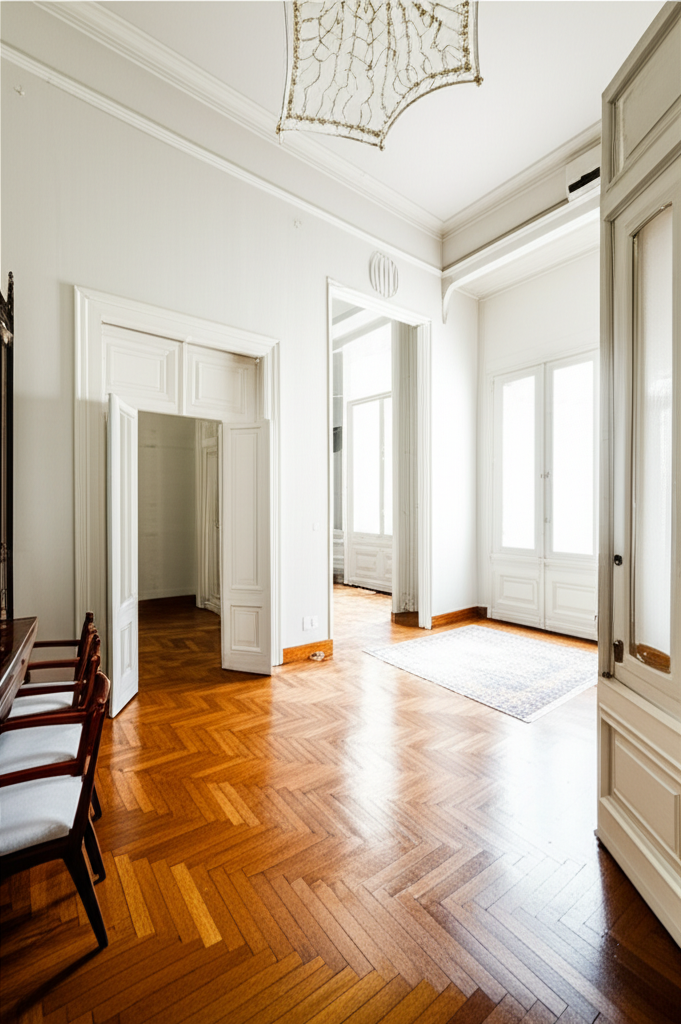
## The Buenos Aires Rental Market in 2026
The Buenos Aires rental market has gone through massive shifts in the past few years. The deregulation of rental laws in late 2023 (replacing the restrictive Ley de Alquileres) fundamentally changed how renting works. By 2026, the market has stabilized into a new normal that's actually more favorable for foreigners than it was a few years ago.
Here's the current landscape: more apartments are available (landlords who pulled units off the market are returning them), prices have adjusted to reflect both inflation and the stabilizing peso, and there are now more options for temporary and flexible contracts that work for expats and digital nomads.
Temporary vs. Permanent Rental Contracts
Temporary Contracts (Alquiler Temporario)
These are the most common option for foreigners, especially those without permanent residency. Key features:
- **Duration**: Typically 3-12 months, renewable
- **Payment**: Usually in USD (either cash or bank transfer), though some landlords accept pesos
- **Furnished**: Almost always come fully furnished with utilities included
- **Price range**: USD $400-900/month for a one-bedroom in a desirable neighborhood (Palermo, Recoleta, Belgrano), USD $250-450 in more residential areas
- **Requirements**: Passport, proof of income, and first month + security deposit (usually one month's rent)
- **No garantia needed**: This is the big advantage -- you don't need an Argentine property guarantor
Permanent Contracts (Alquiler Permanente)
For those with DNI and plans to stay long-term, permanent contracts offer better value:
- **Duration**: Typically 2-3 years under the new deregulated system
- **Payment**: In Argentine pesos, with quarterly or biannual adjustment clauses (usually tied to the ICL or a similar index)
- **Unfurnished**: Most permanent rentals are empty -- you'll need to buy everything from light fixtures to a stove
- **Price range**: Significantly cheaper than temporary contracts. A one-bedroom in Palermo might run ARS 400,000-600,000/month (~USD $330-500)
- **Requirements**: DNI, proof of income (recibos de sueldo or Monotributo registration), and a garantia
The Garantia Problem
The garantia is the biggest hurdle for foreigners signing permanent contracts. A garantia is a property guarantee -- essentially, someone who owns property in Buenos Aires Province or CABA agrees to back your lease. If you don't pay rent, the landlord can pursue a claim against the guarantor's property.
- **Options if you don't have a garantia:**
- **Insurance companies**: Finaer, Garantor, and others offer "garantia de alquiler" insurance policies. You pay a premium (usually 5-8% of annual rent) and they act as your guarantor.
- **Higher deposit**: Some landlords will accept 3-6 months' rent upfront instead of a garantia.
- **Employer guarantee**: If you work for an Argentine company, some employers will provide a corporate guarantee.
Where to Search
Online Platforms - **ZonaProp** (zonaprop.com.ar) -- The largest real estate portal. Most listings are here. - **Argenprop** (argenprop.com) -- Another major portal, good for cross-referencing prices. - **Mercado Libre Inmuebles** -- Mercado Libre's real estate section. More informal, but sometimes has deals. - **Airbnb** -- For initial landing and very short-term stays. Expensive long-term but convenient. - **Facebook groups** -- "Apartments for Rent Buenos Aires" and similar groups. Be cautious of scams but genuine deals exist.
Real Estate Agencies (Inmobiliarias) Working with an agency adds a cost (typically one month's rent as commission) but provides security and a formal contract. For permanent rentals, agencies are almost always involved. For temporary rentals, both direct-from-owner and agency listings exist.
What You'll Need: Document Checklist
- **For temporary contracts:**
- Passport (original + copy)
- DNI if you have one (strengthens your application)
- Proof of income: bank statements, employment letter, or client contracts showing USD $1,500+/month
- First month's rent + security deposit (usually 1-2 months)
- Sometimes a reference from a previous landlord
- **For permanent contracts:**
- DNI (required)
- Proof of income: last 3 recibos de sueldo or Monotributo registration + last 3 months of invoices
- Garantia: property guarantee, insurance, or equivalent
- First month's rent + security deposit + agency commission
Typical Costs Beyond Rent
Budget for these additional expenses:
- **Expensas**: Building maintenance fees. In Buenos Aires, these can be significant -- ARS 80,000-200,000/month depending on the building's amenities (pool, gym, doorman, etc.)
- **Utilities**: In permanent contracts, you pay separately for electricity (Edenor/Edesur), gas (Metrogas), water (AySA), and internet. Budget ARS 30,000-60,000/month total.
- **Agency commission**: One month's rent (for permanent contracts). Some temporary rental agencies charge less.
- **Contract registration**: Some contracts are registered with AFIP, which may incur a small fee.
Tips for Foreigners
**Start temporary, go permanent.** Arrive on a temporary rental for 3-6 months. This gives you time to get your DNI, CUIT, and Monotributo set up. Then you're in a much stronger position to negotiate a permanent contract.
**Negotiate everything.** Prices listed online are starting points. Offering to pay several months upfront, in cash, or in dollars often gets you a 10-20% discount.
**Inspect carefully.** Argentine apartments can have hidden issues -- water pressure, electrical capacity (some older buildings can't handle air conditioning), noise from the street, elevator reliability. Visit at different times of day.
**Read the contract carefully.** Even if it's in Spanish and your Spanish isn't perfect, get someone to translate key clauses. Pay attention to: early termination penalties, what happens to your deposit, adjustment mechanisms, and who pays for repairs.
**Document everything.** Take photos and video of the apartment's condition when you move in. Argentine landlords, like landlords everywhere, may try to keep your deposit for pre-existing damage.
The Buenos Aires rental market rewards patience and flexibility. Don't rush into the first place you see. Spend your first month exploring neighborhoods, understanding prices, and building the documentation you need for the best possible deal.