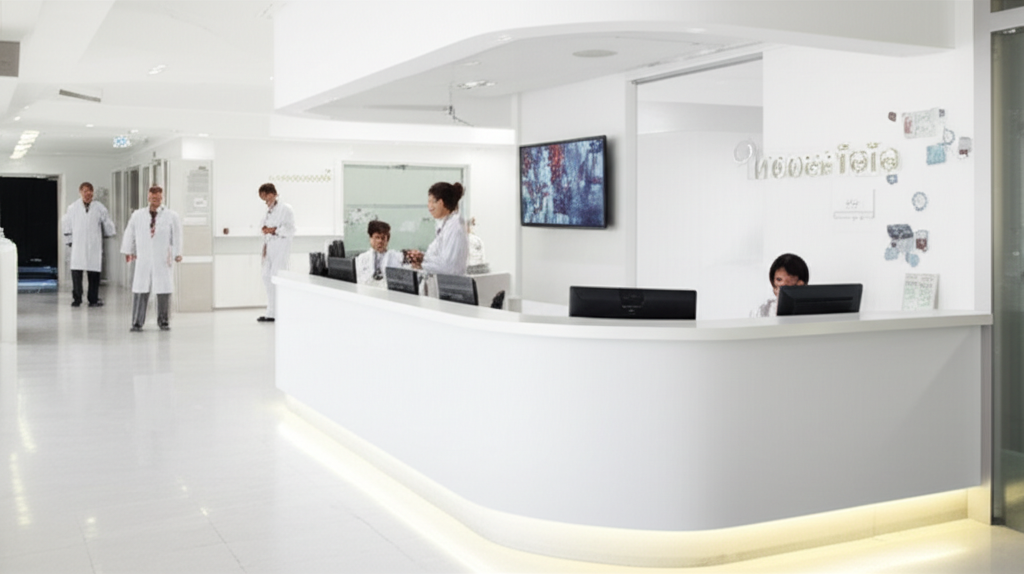
## Healthcare in Argentina: The 2026 Expat Overview
Argentina's healthcare system is genuinely good -- often surprisingly so for expats coming from countries where private healthcare is prohibitively expensive. The country has a three-tier system: public hospitals (free), obras sociales (union-based plans), and prepagas (private health plans). As a foreigner, you'll likely interact with all three at some point.
The Three Tiers Explained
Public Healthcare (Hospitales Publicos) Argentina's public hospitals are free for everyone -- citizens, residents, and even tourists. There's no billing, no insurance check, no questions about your immigration status. Hospital Italiano, Hospital de Clinicas, and Hospital Fernandez are among the most respected public hospitals in Buenos Aires.
- **Pros:**
- Completely free, including emergency care, surgery, and medications (when available)
- Some public hospitals have excellent specialists
- No documentation requirements for emergency care
- **Cons:**
- Long wait times for non-emergency care (weeks to months for specialist appointments)
- Overcrowded, especially in emergency rooms
- Variable quality depending on the hospital and department
- Limited availability of some medications and supplies
**Best for:** Emergency care, and as a safety net if you're between insurance plans.
Obras Sociales (Union Health Plans) If you're employed or registered as Monotributista, you're automatically enrolled in an obra social. These are union-affiliated health plans funded through mandatory payroll deductions or Monotributo payments.
**How it works:** Your Monotributo payment includes an obra social component. You choose your obra social when you register, and it provides basic healthcare coverage. The quality varies enormously -- some obras sociales are excellent, others are barely functional.
- **Recommended obras sociales:**
- **OSDE 210**: The most popular choice for Monotributistas who want decent coverage. It's the "entry level" OSDE plan and covers basic consultations, diagnostics, and emergencies.
- **Union Personal**: Solid coverage, good network of providers.
- **Accord Salud**: Another reasonable option with a decent provider network.
Prepagas (Private Health Plans) Prepagas are Argentina's private health insurance companies. They offer the best care, shortest wait times, and most comprehensive coverage. The major players are OSDE, Swiss Medical, Galeno, Medicus, and Omint.
OSDE vs. Swiss Medical: The Expat Comparison
These are the two most popular prepagas among expats. Here's how they compare:
OSDE - **Plans**: OSDE 210 (basic), OSDE 310 (mid-range), OSDE 410 (premium), OSDE 450/510 (top-tier) - **Cost**: OSDE 310 runs approximately ARS 120,000-180,000/month per person (~USD $100-150) in 2026 - **Network**: Excellent. Huge network of clinics, hospitals, and specialists across Argentina - **Strengths**: Best provider network in the country, widely accepted, good international emergency coverage - **For expats**: OSDE 310 is the sweet spot. It covers most specialist visits, diagnostics, hospitalization, and has reasonable copays
Swiss Medical - **Plans**: SMG 20, SMG 30, SMG 40, SMG 50 - **Cost**: Similar to OSDE -- SMG 30 runs approximately ARS 130,000-190,000/month per person - **Network**: Very strong in Buenos Aires, slightly less extensive in the interior compared to OSDE - **Strengths**: Premium facilities (Swiss Medical Center is essentially a private hospital), excellent maternity care, strong international network - **For expats**: Popular for its English-speaking staff at Swiss Medical Center and premium feel
Other Notable Prepagas - **Galeno**: Good value, solid network, popular mid-range option - **Medicus**: Strong in Buenos Aires, competitive pricing - **Omint**: Premium tier, known for excellent customer service and luxury facilities
Costs in 2026
Healthcare costs in Argentina remain dramatically lower than in the US or Europe:
| Service | Approximate Cost | |---------|-----------------| | GP visit (prepaga, with copay) | ARS 5,000-15,000 (~USD $4-12) | | Specialist visit (prepaga) | ARS 8,000-20,000 (~USD $7-17) | | Blood panel (prepaga) | ARS 3,000-8,000 (~USD $2.50-7) | | MRI (prepaga) | ARS 20,000-50,000 (~USD $17-42) | | Emergency room (public) | Free | | Monthly prepaga plan (one person) | ARS 100,000-250,000 (~USD $83-208) |
*Note: Dollar equivalents fluctuate with the exchange rate.*
2025 Healthcare Changes Affecting Expats
Several changes from 2025 impact foreign residents:
Health Insurance Requirement for Residency Under Decreto 366/2025 and related regulations, proof of health insurance is now a formal requirement for most residency applications. This means you need to show either: - Enrollment in a prepaga plan, OR - An international health insurance policy with coverage in Argentina, OR - Obra social coverage (if you're already working)
This requirement was technically on the books before but enforcement was inconsistent. It's now actively checked during residency processing.
Prepaga Price Regulation Changes The government deregulated prepaga pricing in 2024, allowing plans to adjust prices more freely. This led to significant price increases through 2024-2025. By 2026, prices have stabilized somewhat, but plans are more expensive than they were in 2023 in real terms.
Digital Health Cards Most prepagas and obras sociales now issue digital credenciales (health cards) through their apps. This means you can access care without carrying a physical card -- your DNI number and the provider's app are usually sufficient.
Practical Tips for Expats
**Get a prepaga as soon as possible.** Don't rely solely on the public system. A basic prepaga plan (OSDE 310 or equivalent) costs less than a single doctor's visit in the US and gives you access to excellent care with minimal wait times.
**Use your obra social as a base.** If you're paying Monotributo, you already have an obra social. Many prepagas offer "upgrade" plans where your obra social contribution is applied as a credit toward a better plan. This can reduce your out-of-pocket prepaga cost by 30-50%.
**English-speaking doctors.** In Buenos Aires, many doctors -- especially younger specialists -- speak English. Swiss Medical Center, Hospital Aleman, and Hospital Britanico are particularly expat-friendly.
**Dental care.** Most prepagas include basic dental coverage. For more complex work (crowns, implants), Argentina is known for excellent, affordable dental care. Many expats combine dental work with their time here.
**Prescription medications.** Many medications that require prescriptions in the US or Europe are available over the counter in Argentine pharmacies. Prices are very affordable, often 70-90% less than US retail prices.
**Mental health.** Argentina has more psychologists per capita than any other country. Therapy is culturally normalized and widely available. Most prepagas cover a certain number of sessions per month. Many therapists in Buenos Aires offer sessions in English.
Argentina's healthcare is one of its most underappreciated assets for expats. The combination of quality care, affordable prices, and universal access makes it one of the best healthcare environments for foreign residents anywhere in the world.